
Cuyahoga County Previous Residents by Era
Previous residents research in Cuyahoga County changes with the year. Recorded deeds and additional ownership documents reach from about 1810 to the present through the Recorder and its online search. Tax records cover 1819 through 1986 at County Archives, with later tax material in the Fiscal Office system. Original map volumes reach from about 1860 through 1945 at Archives, while later maps are routed to the Fiscal Office Map Room. Cleveland directory and map holdings add an address-based household layer, and census schedules supply a dated household snapshot when publicly released.
Start with the most recent source that fits the property. A current parcel card supplies a PIN and document lead. A recent transfer can move the title chain backward. For older periods, the archival map, tax, and directory layers often carry the address better than a modern search screen. The result is a series of dated observations, not a claim that one source identifies everyone ever associated with a property.
| Historic source | Local period | Custodian or channel | What it contributes |
|---|---|---|---|
| Recorded deeds and ownership documents | About 1810 to present | Official Records Search or Recorder counter | Parties, dates, document numbers, legal descriptions, and title trail. |
| Tax records | 1819 to 1986; later material in current system | County Archives, then Fiscal Office/MyPlace | Tax and value trail with parcel context. |
| Original map volumes | About 1860 to 1945; later maps in Map Room | County Archives and Fiscal Office Map Room | Lot, street continuity, and building context. |
| Cleveland City Directories | 1837 to 1972 at Archives, not inclusive | Archives and Cleveland Public Library microfilm | Dated name listings; property address section begins in 1929. |
| Federal census | Public release follows the 72-year cycle | Federal and library genealogy channels | Household snapshot and relationship context for a census year. |
| Sanborn and related maps | 1867 to 1970 resource; sheet years vary | CCPL resource and CPL Digital Gallery | Structure, material, lot, and street-layout evidence. |
Note: Save the edition, map, recording, or census date with each entry because a past address is evidence only for that stated period.
Start Cuyahoga County Address History at MyPlace
Begin an address-history trail with Cuyahoga County MyPlace, using the known address and municipality. Capture the permanent parcel number, site address, listed owner, mailing address, Transfers, and Legal Recordings lead. The parcel card also exposes values, building data, permits, and tax-by-year navigation. Its mailing address is tax correspondence, not proof that a named party occupied the site. Treat that distinction as part of the research notes from the first step.
The parcel number persists better than a street number when land is divided, joined, or readdressed. If the card presents a parent or related parcel, keep that relationship. Bring the parcel, legal description, former address forms, document numbers, and dates to every later search. This small set of identifiers gives the Recorder, Archives, or Map Room a way to match the same property when a street label has changed.
A current card is a starting record, not the final source for prior occupants. The actual title trail belongs in the Recorder’s instruments, and an address listing belongs to the dated directory edition that contains it.
Cuyahoga County Previous Residents Deed Trail
The deed chain establishes transfers of a property, not a complete history of everyone who was present there. In Cuyahoga County, open the latest acquisition document from the parcel’s transfer or Legal Recordings lead. Record the buyer, seller, recording date, instrument date, document number, parcel, and legal description. The seller on that deed becomes the next person to search as a grantee, because the earlier acquisition is the document in which that seller received the property.
- Use the MyPlace parcel card to capture the current PIN, site address, transfer lead, and legal description.
- Find the current acquisition in the Recorder’s index and inspect the document image. Record both party roles and all dated identifiers.
- Search the seller as a grantee, restricted by the parcel, legal description, date range, document type, or volume and page as needed.
- Repeat the process for each earlier transfer. Check parent or retired parcel fields and map references whenever the property identity changes.
- When a needed source is not online, take the identifiers to the Recorder counter or make a County Archives property-research appointment.
- Grantor and grantee
- The grantor transfers an interest in a document; the grantee receives that interest.
- Chain of title
- The ordered sequence of recorded transfers used to follow a property backward through its ownership record.
- Legal description
- The lot, boundary, subdivision, or other recorded property description. It is often more durable than an old street number.
- Instrument
- The recorded document itself, such as a deed, release, lien, plat, or related filing.
Cuyahoga County Recorder Search Controls
The Official Records Search advanced form provides the controls needed to narrow a deed trail. It accepts party names, separate grantor and grantee tokens in LASTNAME FIRSTNAME form, recorded and instrument date ranges, document types, document-number ranges, parcel ID, volume, page, property address, and document image controls. Quick Search also accepts grantor or grantee, subdivision, document type, or document number, and its parcel-ID prompt shows the dash format used by the search.
Do not rely on a broad name search when a parcel, legal description, and date are known. The Recorder’s Index Only search treats multiword terms separately, while Index & Full Text OCR reads multiword text as a phrase. OCR can surface a useful lead, but the index and image remain the records to inspect. The live interface displays certification information, so check the date shown when a search is run rather than assuming a fixed cutoff.
The Cuyahoga County Official Records Search is the online document channel for the deed and ownership record.
Its Recorder counter and public-record request route remain the next channel when an image, notation, or earlier source must be confirmed from the custodian.
Cuyahoga County Archives Map Layers
County Archives supplies the local layers that make a former address usable. Its property-research guide directs researchers to an appointment and asks them to bring the address, parcel number, or as much date and map detail as possible. Archives holds tax records through 1986, original map volumes from about 1860 through 1945, historic directories, county atlases from 1852, 1874, 1892, and 1903, and Cleveland map or atlas material for several earlier years. The guide warns that street names, property dimensions, and descriptions can change.
Use a map to locate the lot as it existed in a stated year. A building outline can show that a structure stood on the parcel at the time of that map. Compare the outline with tax duplicates, changes in assessed value, directory entries, and the legal description. That combination can reveal a construction-era clue or a parcel change, but it should not be turned into an exact date without supporting records.
Cleveland Public Library’s historic maps and atlases collection provides a digitized map route alongside the Archives appointment channel.
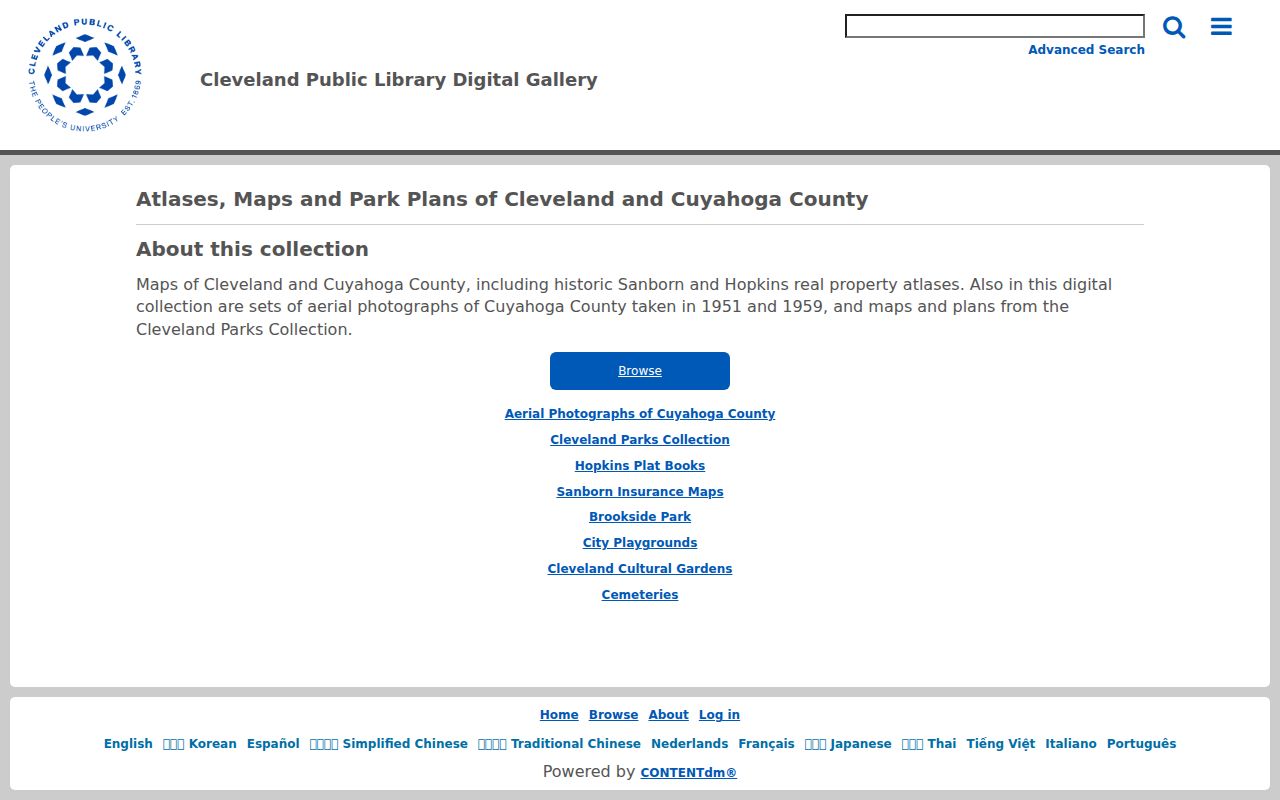
The map collection supports a dated location check before a name from a directory or deed is carried to a different address form.
Note: County Archives permits self-service microfilm and says detailed mail or email requests receive a response within three weeks.
Cuyahoga County Previous Residents in Directories
Directories add the household layer to a title trail, but only for the edition and geography they cover. Cleveland Public Library has a complete microfilm set of Cleveland City Directories. County Archives holds Cleveland directories from 1837 through 1972, not inclusive. From 1929, the end of a Cleveland volume lists properties by address. Find the address in that section, then return to the alphabetical list to verify the matching listing, spelling, and edition year.
The collection has real gaps and changing suburban reach. Some Cleveland-proper years were not published, and suburban coverage changes by title year. An apparent disappearance may mean that a suburb moved to its own title. Before carrying a name forward, inspect the volume’s title page and check one or two editions on either side. The collection details and access choices belong on the Cuyahoga County city directory page; here the directory is used only to date an address trail.
A pre-1929 property search needs a different bridge. Start with the name listing, use maps and tax records to reconcile the address, and then compare nearby editions rather than assuming a volume existed every year.
Cuyahoga County Directory and Census Pairing
Pair a directory edition with the nearest public federal census, but do not collapse the two dates into one event. A directory is compiled and published on its own schedule. A census is a household snapshot for its enumeration year and is released under the federal 72-year access convention. Record the address form, spelling, household relationships, and source date separately. A mismatch can point to a move, an address change, a suburb title change, or a source that used a different geographic label.
A compact historical flow is: parcel and legal description, then dated directory address entry, then the closest available census, then map or tax evidence for the same interval. If the address does not line up, return to the legal description, map book or page, lot or subdivision, former street form, and parcel relationship. That check is safer than guessing from a similar house number.
Ohio’s historical record network also includes County Archives elector, naturalization, vital, and probate collections. Use a record type only for the narrow question it can support, and ask the listed custodian for the original file when a lead needs verification.
Cuyahoga County Probate Trail Endpoints
Probate can help close an estate trail when an estate file or a recorded certificate of transfer connects a deceased owner to a later deed. Cuyahoga County Probate Court is the separate keeper for estates, guardianships, marriage licenses, adoptions, name changes, and related proceedings. Its docket/index supplies a case lead, while its copy process supplies the route for the underlying record. Use the estate number, party name, document date, and parcel or legal-description connection to keep a probate result tied to the correct property.
For full estate, guardianship, adversarial, civil-action, or trust copies, the Court directs users from a case summary to Request Full Case Copy. Mail requests require the right form, a self-addressed stamped envelope, and accepted payment. The Court’s published copy schedule states regular copies are $2 for up to 19 pages and 10 cents per page after 20, certified copies are $2 per page, and full case copies are $10. Older microfilm cases are priced after review.
Cuyahoga County Probate Court’s copy-request page shows the Court’s request route.
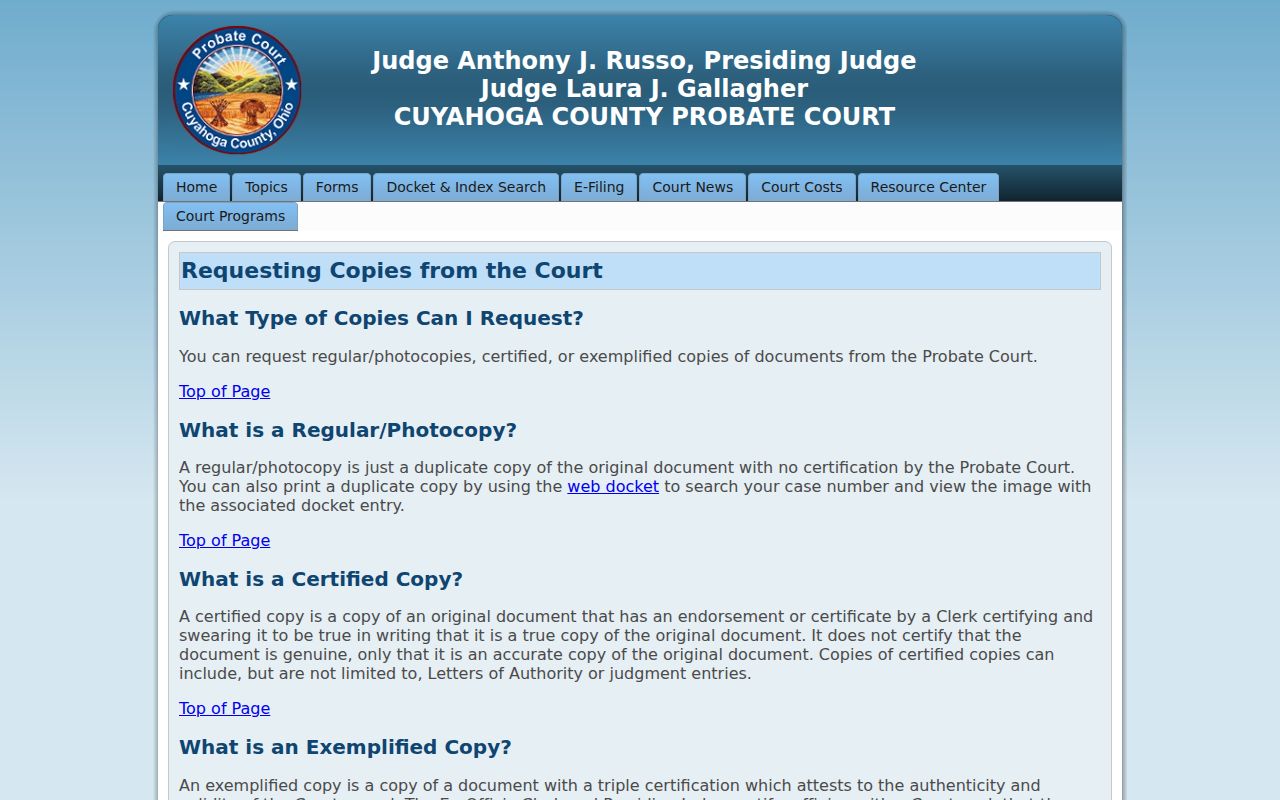
A Probate copy can confirm a case record, but it should be connected back to the recorded transfer and parcel evidence.
The Probate Court marriage department page is another official county record route for a date-specific family-history question.
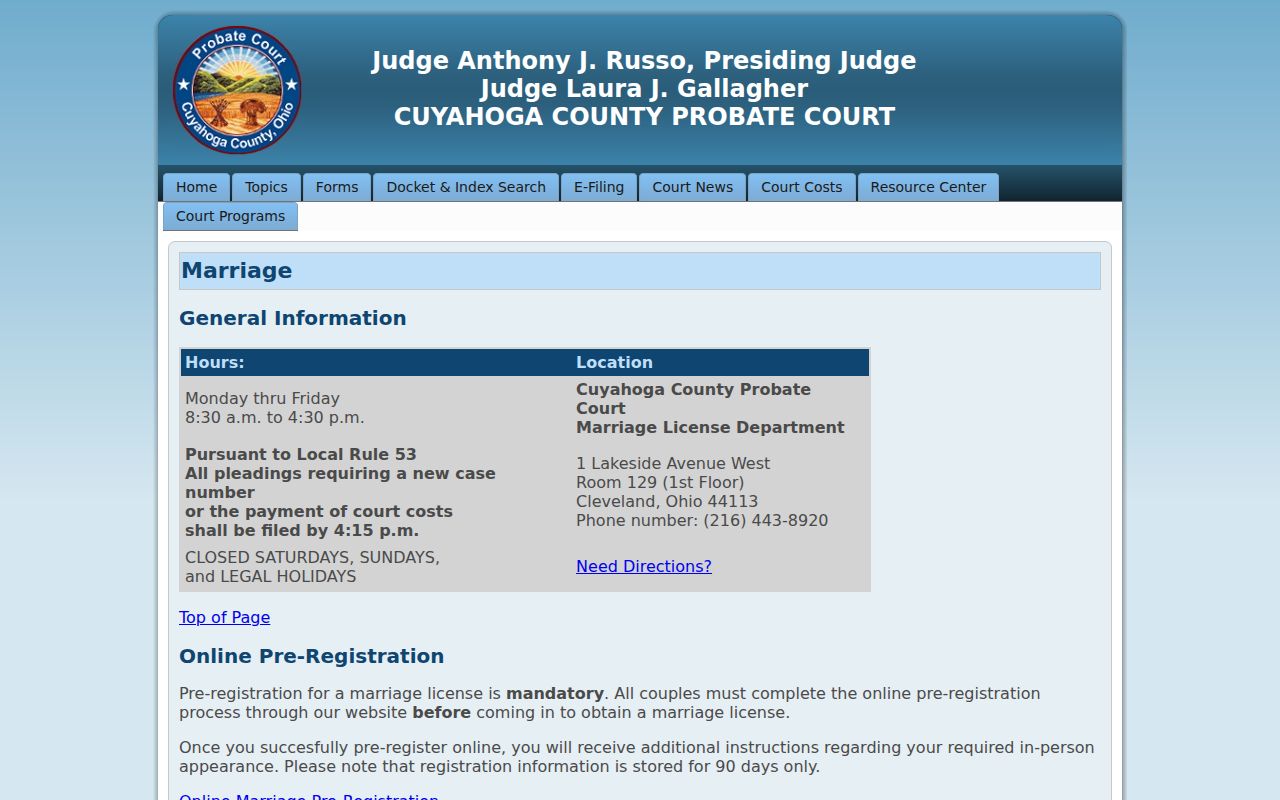
Marriage material should be used as a separate dated record, not as a substitute for an address or title record.
Cuyahoga County Address Trail Limits
Death records and obituaries can identify a likely endpoint for a historical address trail, but they do not replace the recorded title chain. Ohio History Connection’s historical death-certificate research covers Ohio deaths from 1908 through 1970. That date range is distinct from Cleveland’s current vital-record route and the County Archives’ earlier local material. Use the place and year to choose the correct custodian, then compare the result with probate, recorded transfer, and map evidence.
Ohio History Connection’s death-certificate research information describes the period-specific state archival channel.
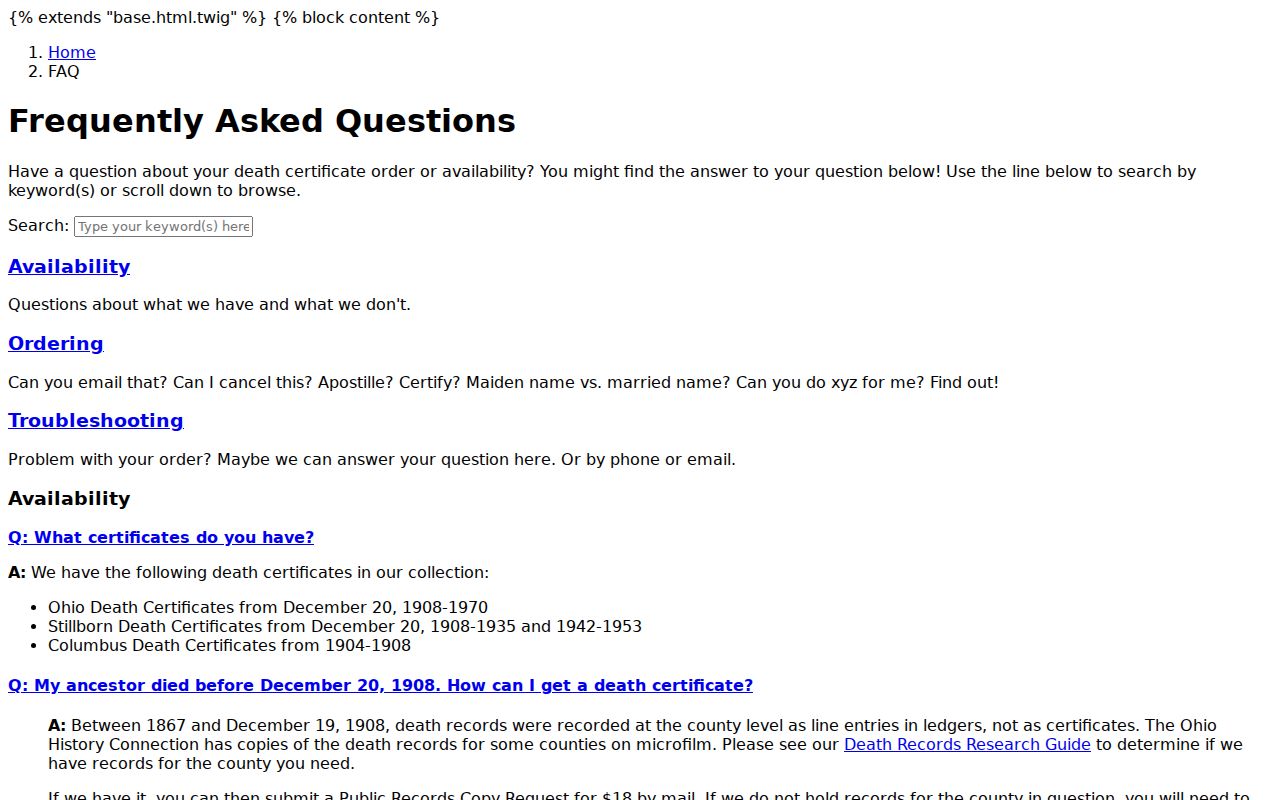
The state archival death channel is useful for a dated research question, not for establishing a present address.
Safe at Home protections, redactions, and record-specific exceptions can limit an address trail. A missing result may be lawful confidentiality, an indexing difference, or a source held only at a counter or archive. Preserve the identifiers and move to the proper custodian rather than trying to infer protected details.
Lawful use. Use Cuyahoga County historical address records for house history, family history, estate questions, or civic research. Do not use them to harass, stalk, or expose protected information about a living person.